In the world of dentistry, understanding technical terms can make a real difference when approaching a treatment journey with greater awareness. At Super White Dental Clinic, one of the main goals is to support patients not only clinically but also from an informational perspective.
When discussing implantology, many technical concepts come into play that are not always immediately clear. Terms such as Dental Implant, Osseointegration, and Implant Abutment are part of a true technical glossary that helps patients understand each stage of treatment. Modern implantology relies on advanced procedures and innovative technologies, where tools such as the CBCT Scan and Guided Implant Surgery allow for highly precise planning.
At the same time, understanding the role of components like the Healing Cap, Implant Crown, or techniques such as Immediate Load Implant helps patients feel more involved in their care journey. Even more complex aspects, such as Bone Graft, Sinus Lift, or conditions like Peri-implantitis, become clearer when explained in a simple and accessible way.
This guide has been created to provide a comprehensive overview of implantology, naturally integrating key technical terms to help patients better understand every stage of the treatment.
What is implantology and what are dental implants?
Implantology is a branch of dentistry focused on replacing missing teeth through the insertion of implants into the bone. The concept is simple: replacing the root of a tooth with a stable artificial structure called a Dental Implant, which supports a prosthetic crown.
Today, this approach represents one of the most advanced solutions for restoring chewing function and the aesthetics of the smile. Unlike other options, the implant integrates directly with the bone through a process known as Osseointegration, creating a strong and long-lasting foundation.
Implantology is not just about replacing a tooth, but a complete rehabilitation process that considers multiple factors:
- bone quality and quantity
- overall patient health
- position of the missing tooth
- aesthetic expectations
Thanks to modern advancements, even complex cases can now be treated with greater safety and predictability.
How do dental implants work?
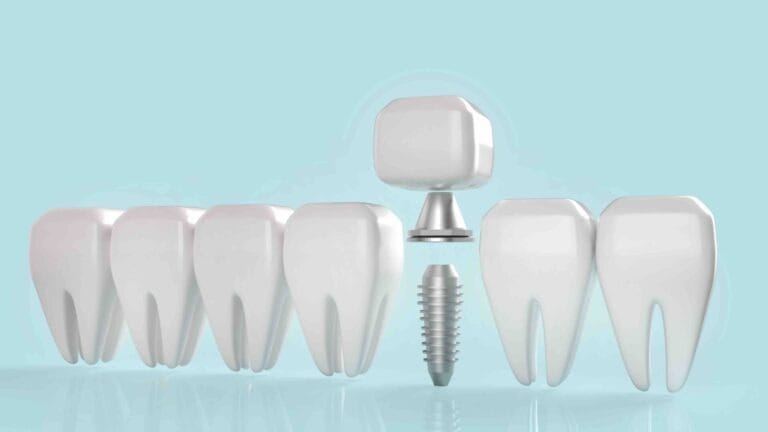
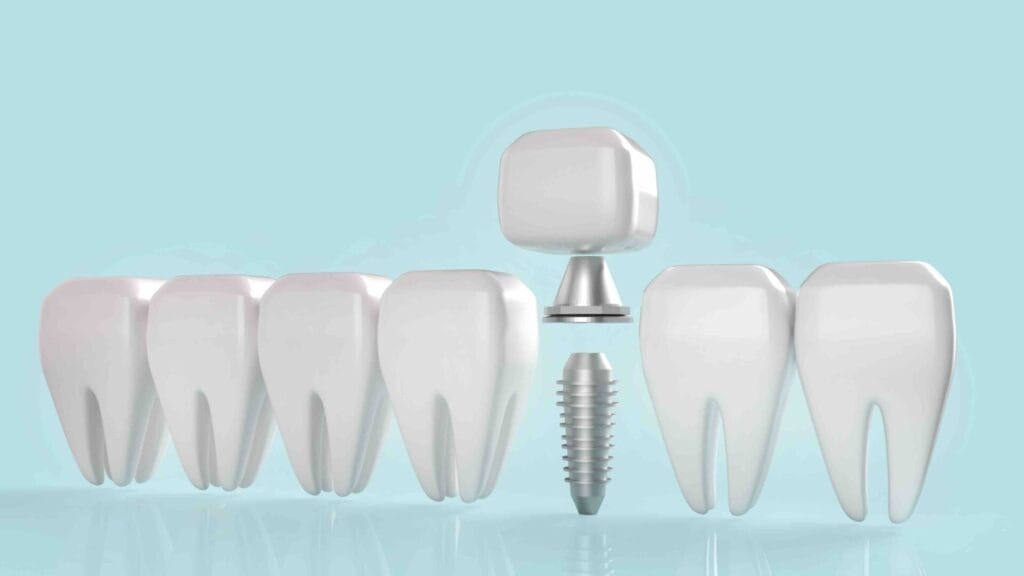
A dental implant works through a structure composed of several components. After the titanium screw is placed into the bone, a connecting element called the Implant Abutment is attached, supporting the final prosthetic tooth.
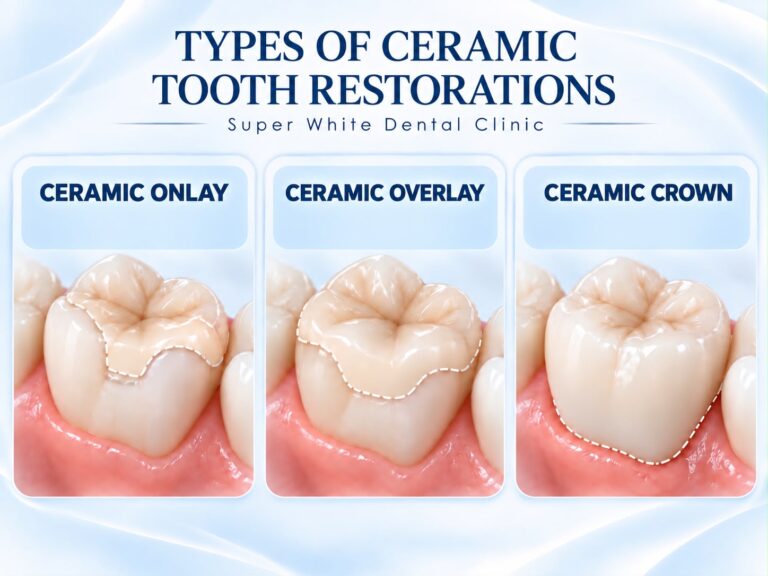
The visible part, known as the Implant Crown, is custom-designed to blend seamlessly with natural teeth. This process allows both functional and aesthetic restoration.
The main stages include:
- implant placement
- healing and integration phase
- placement of prosthetic components
- final smile restoration
Each step is carefully planned to ensure long-term stability and success.
How are dental implants planned?
Planning is one of the most important aspects of modern implantology. With advanced technologies such as the CBCT Scan, it is possible to obtain 3D images of the bone and precisely evaluate the ideal position for the implant.
This approach helps to:
- reduce risks
- improve safety
- optimise treatment time
Techniques like Guided Implant Surgery allow this planning to be transferred directly into the clinical procedure, increasing precision.
In some cases, Flapless Surgery may also be used, a minimally invasive technique that reduces surgical trauma and promotes faster healing.
Can you have dental implants with low bone volume?
One of the most common questions concerns whether implants are possible when there is insufficient bone. Today, thanks to advanced techniques, this is often achievable.
Procedures such as Bone Graft help increase bone volume, creating a stable foundation for implant placement. In upper jaw cases, a Sinus Lift may be required to prepare the area near the sinus cavities.
These solutions are always assessed individually to ensure maximum stability and long-term success.
How long do dental implants last?
The longevity of dental implants depends on several factors, but thanks to modern implantology, they can last for many years.
Success is influenced by:
- proper bone integration
- patient’s oral hygiene
- regular check-ups
- lifestyle habits
The Implant Success Rate is very high today, especially when treatment is carefully planned and supported by advanced technology.
Maintenance also plays a key role in preserving results over time.
Are dental implants painful?
One of the main concerns for patients is pain. In reality, implant surgery is performed under local anaesthesia and is generally well tolerated.
Thanks to modern techniques and minimally invasive approaches, post-operative discomfort is usually limited. Some mild swelling or sensitivity may occur, but it typically resolves within a few days.
Solutions such as the Immediate Load Implant can also reduce treatment time and improve patient comfort, offering quicker results.
What happens after implant placement?
After the procedure, the healing phase begins, during which the implant integrates with the bone. During this period, a Healing Cap may be used to shape the gum tissue in preparation for the final crown.
It is essential to follow the dentist’s instructions to ensure proper healing and avoid complications. Good oral hygiene is crucial to prevent issues such as Peri-implantitis, an inflammation of the tissues surrounding the implant.
Patients are monitored through regular follow-up appointments to ensure optimal healing.
Complete guide to implantology: conclusion
Implantology is now an advanced and reliable solution for replacing missing teeth. Understanding terms such as Dental Implant, Osseointegration, Implant Abutment, and Implant Crown helps patients approach treatment with greater confidence.
Thanks to technologies like the CBCT Scan, innovative techniques such as Guided Implant Surgery, and personalised care plans, it is possible to achieve highly precise and long-lasting results.
At Super White Dental Clinic , every treatment is carefully planned with the patient’s needs at the centre, offering a clear, safe and personalised pathway.
📞 +44 2036457885
💬 07947903827
✉️ info@superwhitedentalclinic.co.uk
📍 41 S Lambeth Rd, London SW8 1RH, United Kingdom