Does whitening damage the enamel?
Tooth whitening is one of the most requested aesthetic dental treatments, yet it is also one of the most misunderstood. Patients frequently ask whether whitening procedures weaken teeth, erode enamel, or cause permanent damage. The concern behind the question “does whitening damage the enamel” is legitimate, because enamel is irreplaceable and essential for long-term oral health.
At Super White Dental Clinic in London, whitening treatments are prescribed only after clinical evaluation and are performed using protocols that respect enamel biology. This article explains how whitening works, what enamel really is, when whitening is safe, when it is not, and why professional supervision makes a critical difference.
What is tooth enamel and why is it so important?
Tooth enamel is the outermost layer of the tooth and the hardest tissue in the human body. Its function is to protect the underlying dentin and pulp from mechanical forces, temperature changes, and chemical attacks.
Enamel:
- Does not regenerate once lost
- Acts as a protective barrier
- Determines how light reflects on the tooth surface
- Plays a key role in tooth colour perception
When patients ask “does whitening damage the enamel,” the real concern is whether whitening compromises this protective layer. Understanding how enamel works is essential before evaluating the safety of whitening procedures.
How does professional tooth whitening actually work?
Professional tooth whitening works by using controlled whitening agents, typically based on hydrogen peroxide or carbamide peroxide. These substances penetrate the enamel and break down pigment molecules responsible for discoloration.
What whitening does:
- Alters the colour of internal pigments
- Does not remove enamel structure
- Does not mechanically abrade the tooth
What whitening does not do:
- It does not dissolve enamel
- It does not thin enamel
- It does not weaken healthy tooth structure
When properly prescribed, whitening works through a chemical reaction that changes how light interacts with pigments, not by damaging the tooth surface.
Does whitening damage the enamel when done professionally?
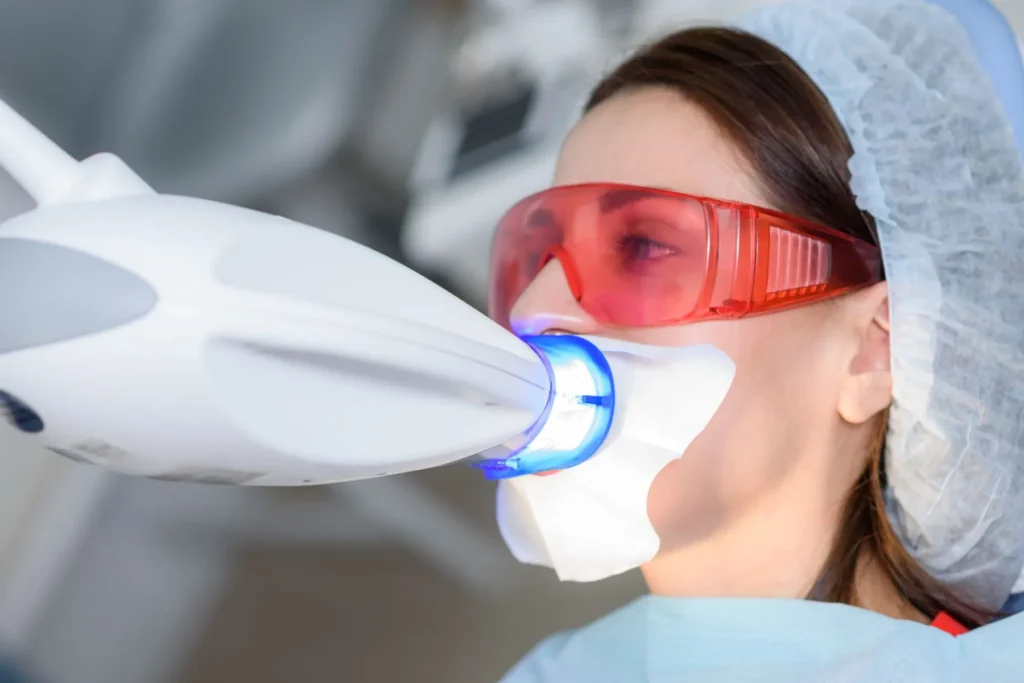
When performed under professional supervision, whitening does not damage enamel. Multiple scientific studies confirm that professionally controlled whitening treatments do not cause permanent enamel loss or structural damage.
In clinical settings:
- Whitening concentration is carefully selected
- Exposure time is controlled
- Teeth and gums are protected
- Enamel integrity is preserved
At Super White Dental Clinic, whitening protocols are chosen based on enamel condition, tooth sensitivity, and medical history. The answer to “does whitening damage the enamel” is no, when the treatment is professionally planned and monitored.
Why whitening is often blamed for enamel damage
Whitening is frequently blamed for enamel damage because its effects are confused with other phenomena, especially temporary sensitivity.
Common misconceptions include:
- Sensitivity equals enamel damage
- Whiter teeth must mean thinner enamel
- Any discomfort indicates harm
In reality, sensitivity after whitening is usually caused by:
- Temporary dehydration of the tooth
- Increased permeability of enamel during treatment
- Exposure of nerve endings in sensitive teeth
These effects are reversible and do not represent structural enamel damage. Sensitivity typically resolves within a short time when whitening is correctly managed.
Can whitening damage the enamel if done incorrectly?
Yes. Whitening can contribute to enamel problems when it is misused, overused, or applied without professional guidance. This distinction is crucial.
Risks increase when:
- Whitening products are used excessively
- Concentrations are inappropriate
- Treatment is repeated too frequently
- Existing enamel defects are ignored
Unsupervised whitening can lead to:
- Increased tooth sensitivity
- Surface roughness
- Gum irritation
- Dehydration-related discomfort
This is why the question “does whitening damage the enamel” cannot be answered without considering how whitening is performed.
What role does dental cleaning play before whitening?
Professional dental cleaning is an essential step before any whitening treatment. It ensures that the whitening agent acts evenly and safely on the tooth surface.
Dental cleaning before whitening:
- Removes plaque and tartar
- Eliminates surface stains
- Allows accurate shade assessment
- Reduces uneven whitening results
Skipping this step may lead to inconsistent colour changes and unnecessary exposure of enamel to whitening agents. At Super White Dental Clinic, whitening is never performed without proper hygiene preparation.
Does whitening weaken enamel over time?
Scientific evidence shows that professionally managed whitening does not weaken enamel over time. In fact, when whitening is combined with remineralising protocols, enamel can maintain or even improve surface smoothness.
Professional whitening protocols often include:
- Fluoride or remineralising agents
- Controlled treatment intervals
- Post-whitening care instructions
Problems arise only when whitening is abused or repeated without indication. Enamel health depends more on overall oral hygiene, diet, and acid exposure than on correctly performed whitening treatments.
How enamel condition affects whitening safety
Not all enamel is the same. Enamel thickness, mineral content, and surface integrity vary between patients.
Whitening safety depends on:
- Presence of enamel cracks or erosion
- Existing sensitivity
- History of acid wear or bruxism
- Quality of oral hygiene
This is why whitening should never be standardised. At Super White Dental Clinic, enamel is evaluated clinically and digitally before prescribing any whitening treatment, ensuring that whitening is appropriate and safe.
Does whitening damage the enamel in older patients?
Age alone does not make whitening unsafe, but enamel changes over time. Older patients may have:
- Thinner enamel
- More exposed dentin
- Increased sensitivity
In these cases, whitening protocols must be adapted. Lower concentrations, shorter sessions, or alternative aesthetic solutions may be more appropriate.
The question “does whitening damage the enamel” becomes age-specific only when enamel wear is already present. Professional assessment remains the key factor.
At-home whitening versus in-clinic whitening and enamel safety
The safety of whitening depends more on control than on location. Professionally prescribed at-home whitening differs significantly from unsupervised products.
Professionally supervised at-home whitening:
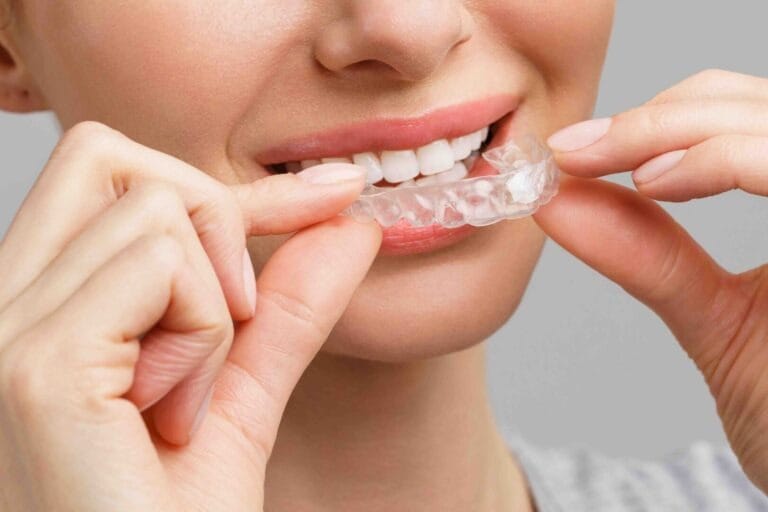
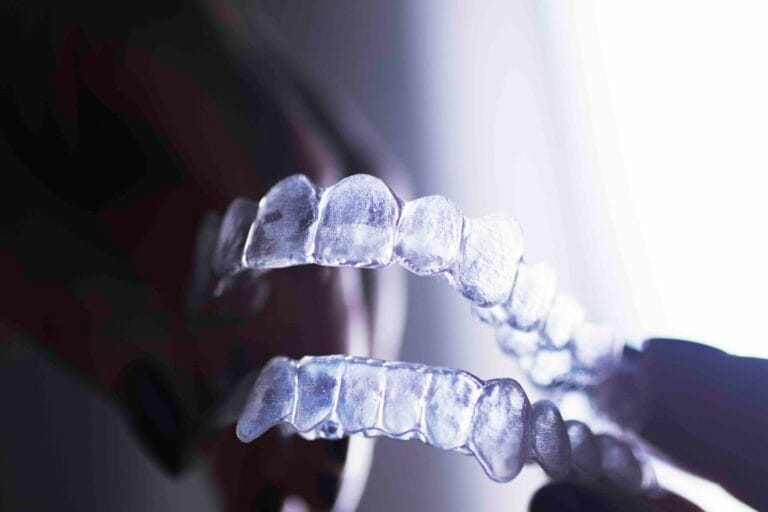
- Uses customised trays
- Has controlled concentrations
- Includes follow-up checks
Unregulated whitening products:
- Often lack proper instructions
- May be overused
- Do not account for enamel condition
At Super White Dental Clinic, at-home whitening is prescribed as a medical treatment, not a cosmetic accessory.
Can whitening improve the appearance of enamel without damaging it?
Yes. Whitening can enhance enamel appearance by improving light reflection and colour uniformity, without compromising structure.
Benefits include:
- Brighter, more even tooth colour
- Improved smile aesthetics
- Enhanced confidence
When enamel is healthy, whitening can be performed safely and predictably. The goal is enhancement, not alteration of tooth anatomy.
Why professional supervision is essential when whitening teeth
Tooth whitening is a medical procedure involving active chemical agents. Professional supervision ensures:
- Correct diagnosis
- Appropriate product selection
- Enamel and gum protection
- Management of sensitivity
Without professional guidance, patients may unknowingly expose their enamel to unnecessary risks. At Super White Dental Clinic, whitening is integrated into a broader preventive and restorative philosophy.
Conclusion: does whitening damage the enamel when done correctly?
Does whitening damage the enamel? When professionally planned and correctly performed, the answer is no. Whitening does not remove, thin, or weaken enamel. It works by altering internal pigments while preserving tooth structure.
Problems arise only when whitening is misused, repeated excessively, or applied without clinical evaluation. Enamel health depends on diagnosis, technique, and maintenance, not on whitening itself.
At Super White Dental Clinic, whitening treatments are designed to respect enamel biology while achieving safe and natural-looking results. If you are considering tooth whitening and want to understand whether it is suitable for your enamel condition, you can book an initial consultation at Super White Dental Clinic, 41 S Lambeth Rd, London SW8 1RH.
📍 Super White Dental Clinic – 41 S Lambeth Rd, Vauxhall London SW8 1RH
📞 Phone: 020 3645 7885 – WhatsApp: 07947903827
📧 info@superwhitedentalclinic.co.uk
👉 Book your consultation today and start your implant journey